
Helping Garden Wildlife Through a Drought
Birds and hedgehogs are in trouble long before your plants are. The problem isn't thirst so much as baked ground — and a shallow dish of water is the most useful thing in your garden right now.
When a garden goes into drought, the plants show it first and suffer last. A shrub that wilts in August will almost certainly be fine in October. The animals in the same garden are on a much shorter timescale, and they are usually in difficulty weeks before anything looks obviously wrong.
It is worth understanding why, because it changes what actually helps.
The problem is the ground, not the thirst
Drinking water matters. But the thing that puts garden wildlife into real trouble in a long dry spell is that baked soil stops being a food source.
Earthworms respond to drought by burrowing deep and going dormant. Beetle larvae, leatherjackets and the rest of the soil fauna do something similar, or simply die back. Slugs and snails retreat into cool damp corners and stop moving about at night. Within a few weeks of hard, dry ground, the entire layer of food that lives in the top few inches of soil has effectively gone.
That is a direct problem for the two groups people notice most.
Blackbirds, song thrushes and robins feed by hunting invertebrates at or just under the surface. Watch a blackbird on a lawn in a drought and you will see it working much harder for much less. Adults can cope for a while. Broods cannot — a late nest depends on a steady supply of soft-bodied invertebrates, and there is a point at which the adults simply cannot deliver enough.
Hedgehogs are in the same bind, more acutely. They are almost entirely insectivorous, they need a substantial intake every night, and they cannot switch to seeds or berries when the beetles run out. A hedgehog seen out in daylight, moving slowly, or lying still in the open is not sunbathing. It is in trouble, and it needs a rescue centre rather than a saucer.
Both problems are made worse by heat, and neither is solved by watering the border.
Water: the highest-value thing you can do
If you do one thing, put out water. It costs nothing, it works immediately, and in a drought it is genuinely the most useful object in a garden.
Use more than one, at more than one height. A raised bird bath serves birds. A shallow dish at ground level serves hedgehogs, foxes and everything else that cannot fly. They are different customers and they need separate provision.
Keep it shallow. Two to five centimetres is plenty for drinking and bathing. Deep water is a hazard, not a service.
Put stones or a sloping stick in it. This is the detail most people miss, and it turns a dish into something that also waters bees, wasps and hoverflies without drowning them. A few pebbles breaking the surface, or a branch angled from the bottom to the rim, gives insects a landing place and gives a small mammal a way out. Any container with vertical sides and no exit ramp will eventually kill something.
Change it daily and scrub it weekly. Standing water in high summer grows bacteria fast, and a dirty bird bath is an efficient way to spread disease through a local population — trichomonosis in finches in particular. Rinse it out, scrub it properly once a week, and site it in shade if you have the choice.
Site it near cover but not against it. Birds want an escape route and a clear view of the approach. A bath a couple of metres from a shrub is used far more than one tucked under it, where a cat can wait.
Rainwater from a butt is fine for all of this, and during a hosepipe ban it is the sensible source.
Food, and the things not to put out
Water is unambiguous. Food needs a little more care.
For birds, the useful additions in a drought are the soft, high-fat and high-moisture foods that stand in for invertebrates: suet, sunflower hearts, and fruit — halved apples, pears or soft berries left on the ground for blackbirds and thrushes. Do not put out dry bread, which is close to worthless nutritionally and swells uncomfortably. If you feed dried mealworms, soak them in water first; dry ones make dehydration worse, which is precisely the wrong direction in a drought.
For hedgehogs, meat-based wet cat or dog food, or a proper hedgehog food, put down at dusk in a spot a cat cannot easily reach.
Two things not to give hedgehogs, both of which are still repeated as folklore. Never milk — hedgehogs are lactose intolerant and it causes serious diarrhoea, which in a drought can be fatal. And do not feed dried mealworms as a staple: they are calcium-poor relative to phosphorus and are linked to metabolic bone disease. The British Hedgehog Preservation Society has been clear about both for years.
If you are feeding at all, be consistent. Animals adjust their foraging around a reliable source, and a feeding station that appears for a fortnight and then stops can leave them worse off than if it had never existed.
The structural things, which matter more than they look
Cut a hedgehog hole. A 13cm by 13cm gap at the base of a fence lets a hedgehog through and keeps everything else out. Hedgehogs range over a wide area each night, and a garden sealed on all four sides is a dead end. In a drought, when they have to travel further to find both food and water, a sealed garden is actively dangerous. Ask your neighbour to do the same and you have a corridor.
Leave a corner alone. A pile of logs, a heap of prunings, an unmown strip. Undisturbed, shaded ground stays cooler and damper than anything else in the garden, and it is where the surviving invertebrates will be. It is also where a hedgehog will shelter through the heat of the day. This is the cheapest habitat improvement there is and it requires you to do nothing.
Keep a pond topped up, but gently. A pond dropping fast concentrates everything living in it into less water — warmer, lower in oxygen, and worse for tadpoles and newt larvae. Top it up from a water butt rather than the tap where you can. If you must use mains water, add it slowly, and let it stand in a bucket for a day first if the pond has fish.
Mow less and mow higher. Longer grass shades its own roots, holds moisture, and keeps a living layer of insects going. A lawn cut short in a drought goes brown faster and supports nothing. Raising the blades is free and it works.
Planting for the animals that are still here
None of this is a substitute for a garden that produces food, and late-season nectar is the thing most gardens run short of just as drought bites hardest.
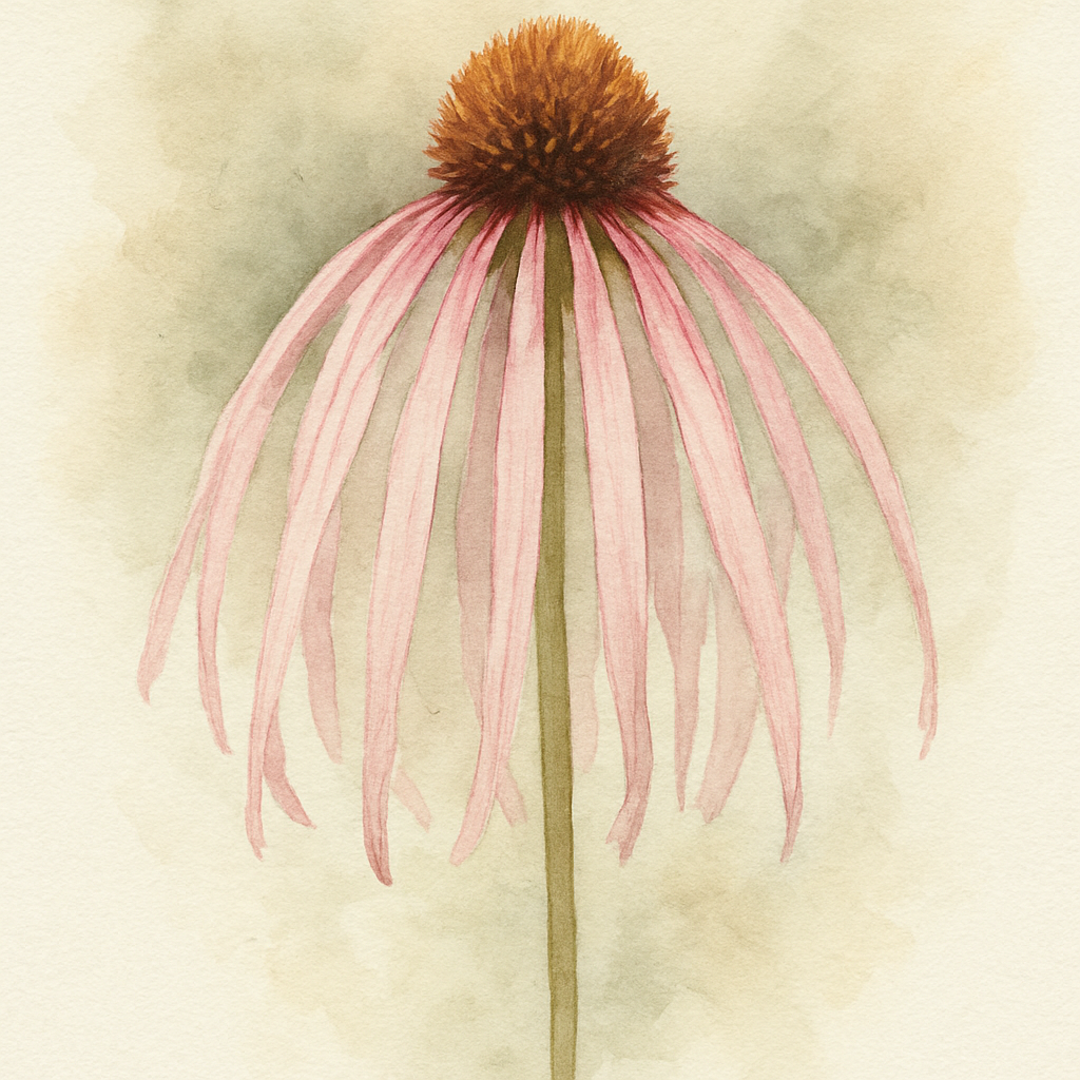
The good news is that the plants that cope best with drought are disproportionately good for pollinators — the aromatic Mediterranean shrubs and the flat-headed prairie perennials are both heavily worked by bees. Nepeta 'Walker's Low' flowers for months and rewards a hard cut-back with a second flush. Echinacea pallida provides nectar in late summer and then a seedhead for finches if you leave it standing. Phlomis russeliana does the same job with more structure.
Our wildlife planting and drought and dry soil lists overlap considerably, which is not a coincidence.
But plant that in autumn. This week, put out a dish of water with a stone in it. That is the one that counts today.