
Planting a Tree for Shade — and Keeping It Alive in Year One
A tree is the only thing that meaningfully cools a garden. Choosing evergreen or deciduous, getting the size right, planting at the right time — and the part everyone skips, which is that a new tree has no root system and will die without sustained watering.
Everything else in this series manages water. A tree changes the conditions.
Shade cast over a border in mid-afternoon drops the soil temperature underneath it substantially, cuts evaporation from the surface, and shelters the plants below from the drying wind that does at least as much damage as the sun. A garden with a decent tree in it is a measurably easier garden to keep alive in a dry summer, and it goes on being one for decades.
It is also the slowest thing you can do, which is why it is worth starting now rather than next year.
Deciduous or evergreen
For shade near a house or a sitting area, deciduous is almost always the right answer, and the reasoning is straightforward: a deciduous tree gives you dense shade exactly when you want it, from May to September, and then drops its leaves and lets the low winter sun through to the house and garden when you want that instead. It is a seasonal awning that operates itself.
An evergreen gives permanent cover. That is what you want for screening a view, blocking a prevailing wind, or hiding something all year round — and it is precisely what you do not want casting a shadow over a north-facing room in January. Evergreens also make dry shade underneath them, which is one of the hardest planting situations there is.
The usual sensible answer for a normal garden is deciduous for the shade, and an evergreen elsewhere if you need screening.
Getting the size right
This is where most regret comes from. The ultimate height matters far more than the height in the pot, and it is the one thing that cannot be corrected later without taking the tree out.
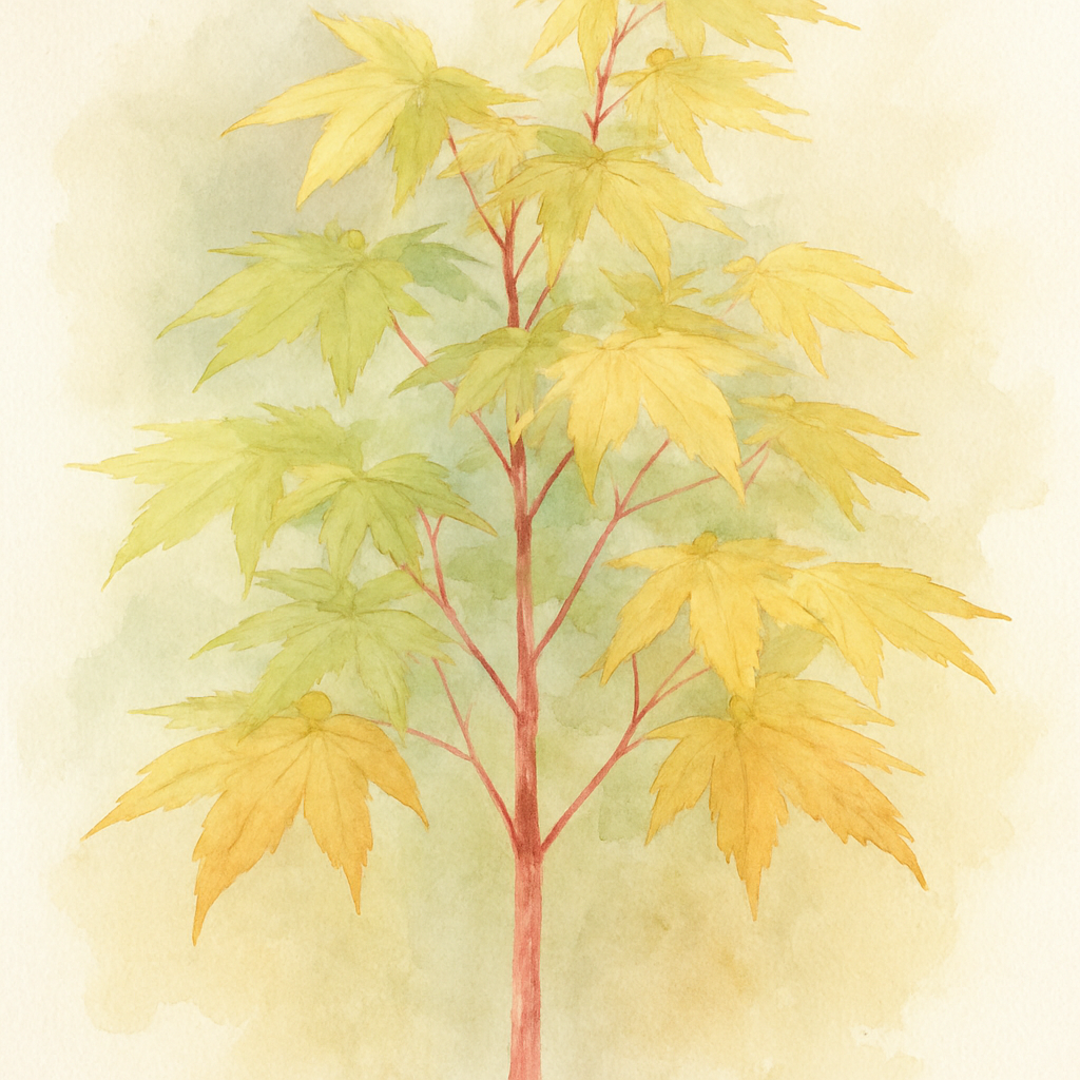
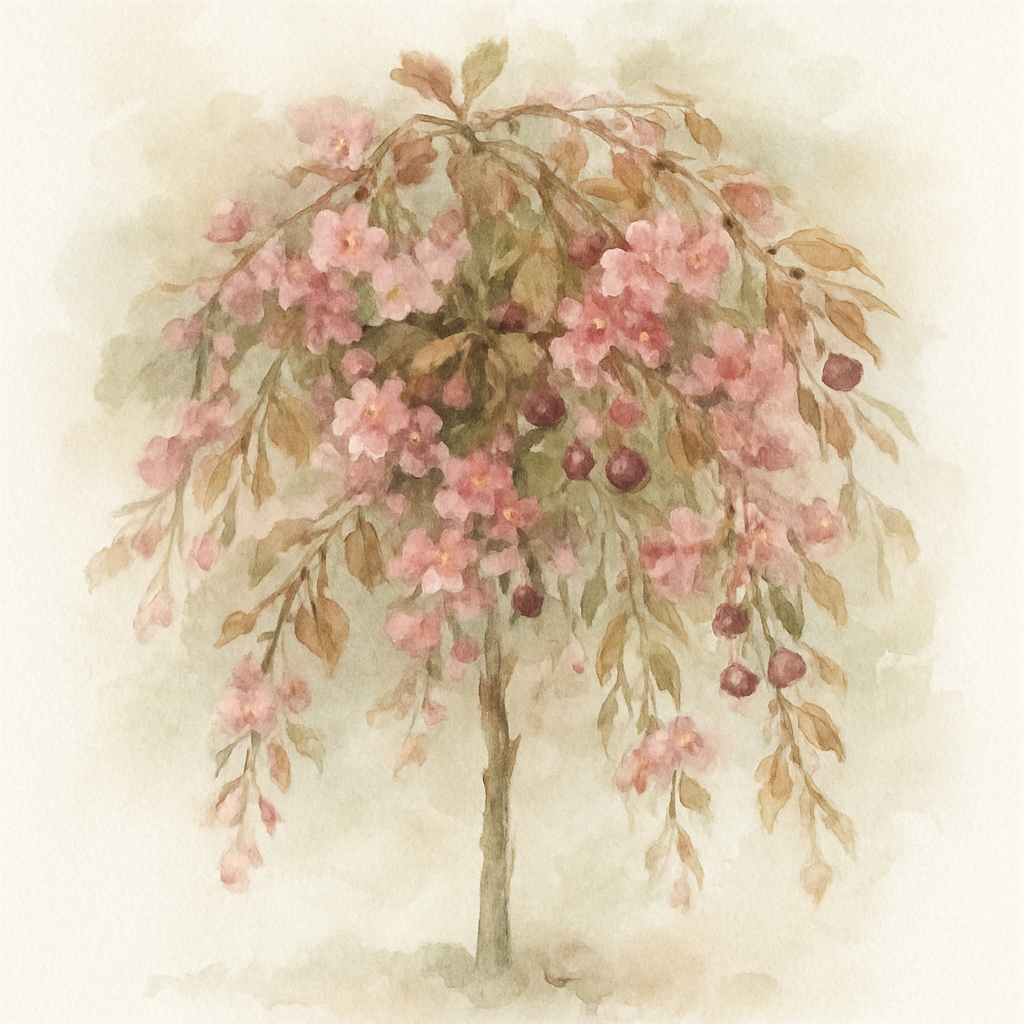
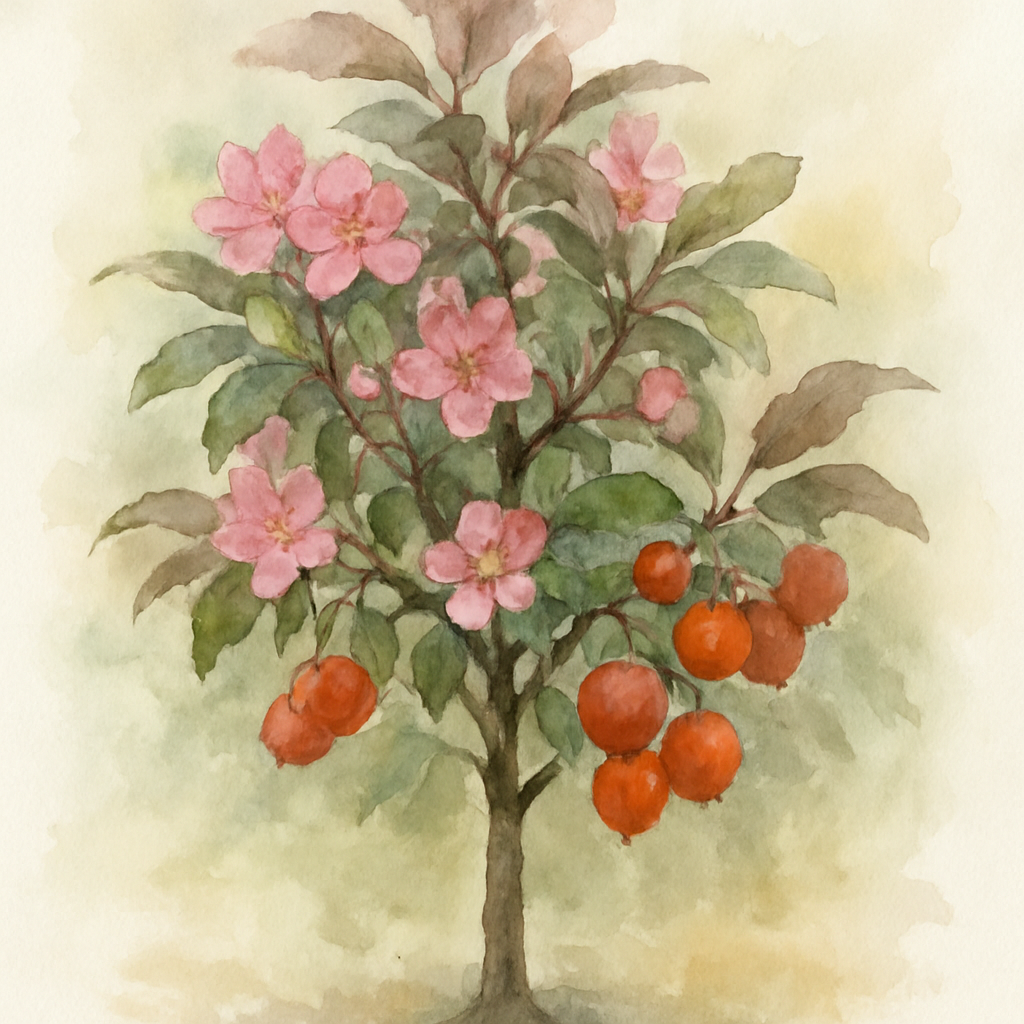
Small — up to about four metres. For a courtyard, a small garden, or close to a boundary. Crab apples such as Malus 'Rudolph' and Malus 'Royal Beauty' are hard to beat: spring blossom, autumn fruit that the birds strip, and a manageable final size. Acer palmatum 'Sango-kaku' is beautiful and gives coral-red winter stems, but be honest about its needs — Japanese maples want shelter and dislike dry, exposed positions, so it is a plant for a protected corner rather than an open lawn.
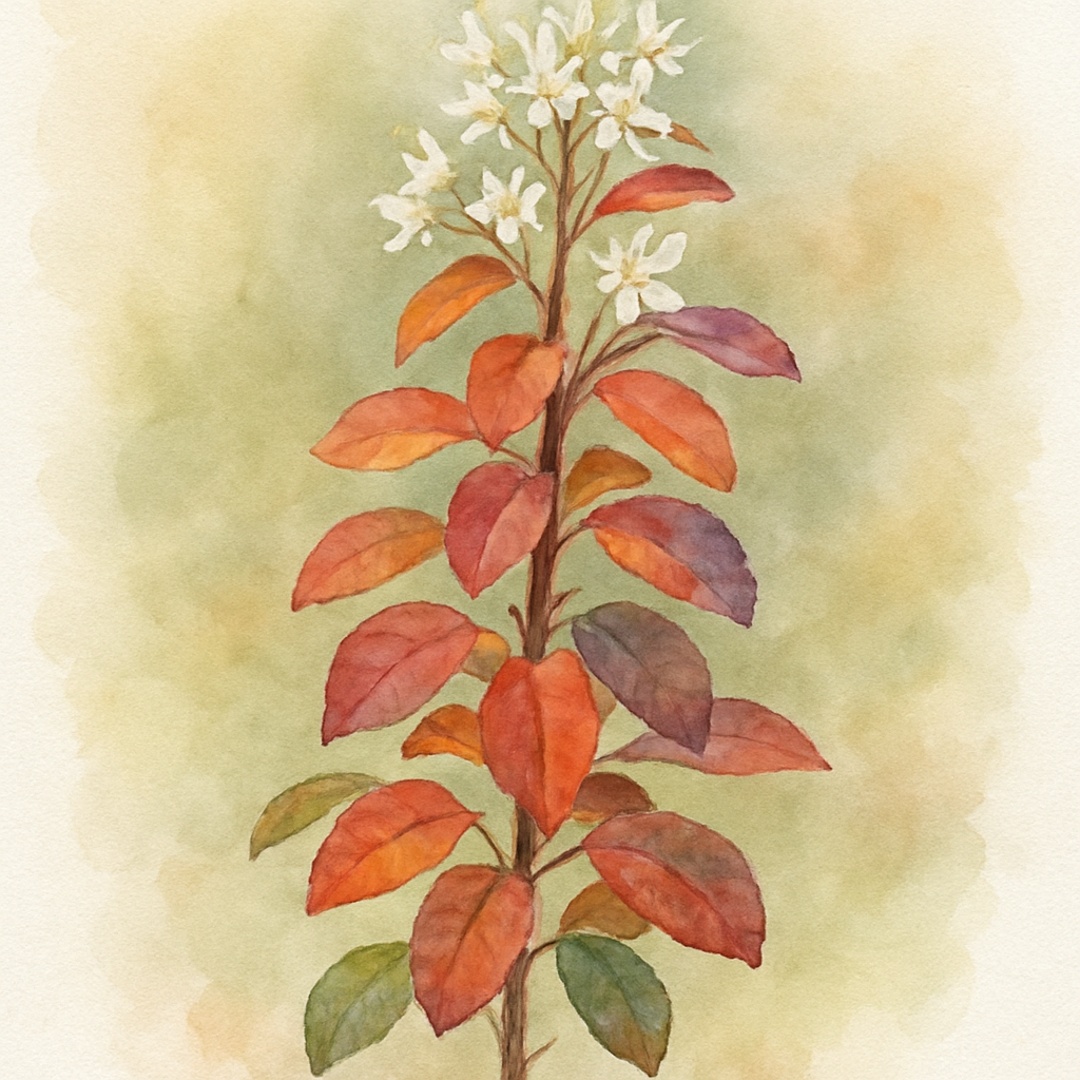
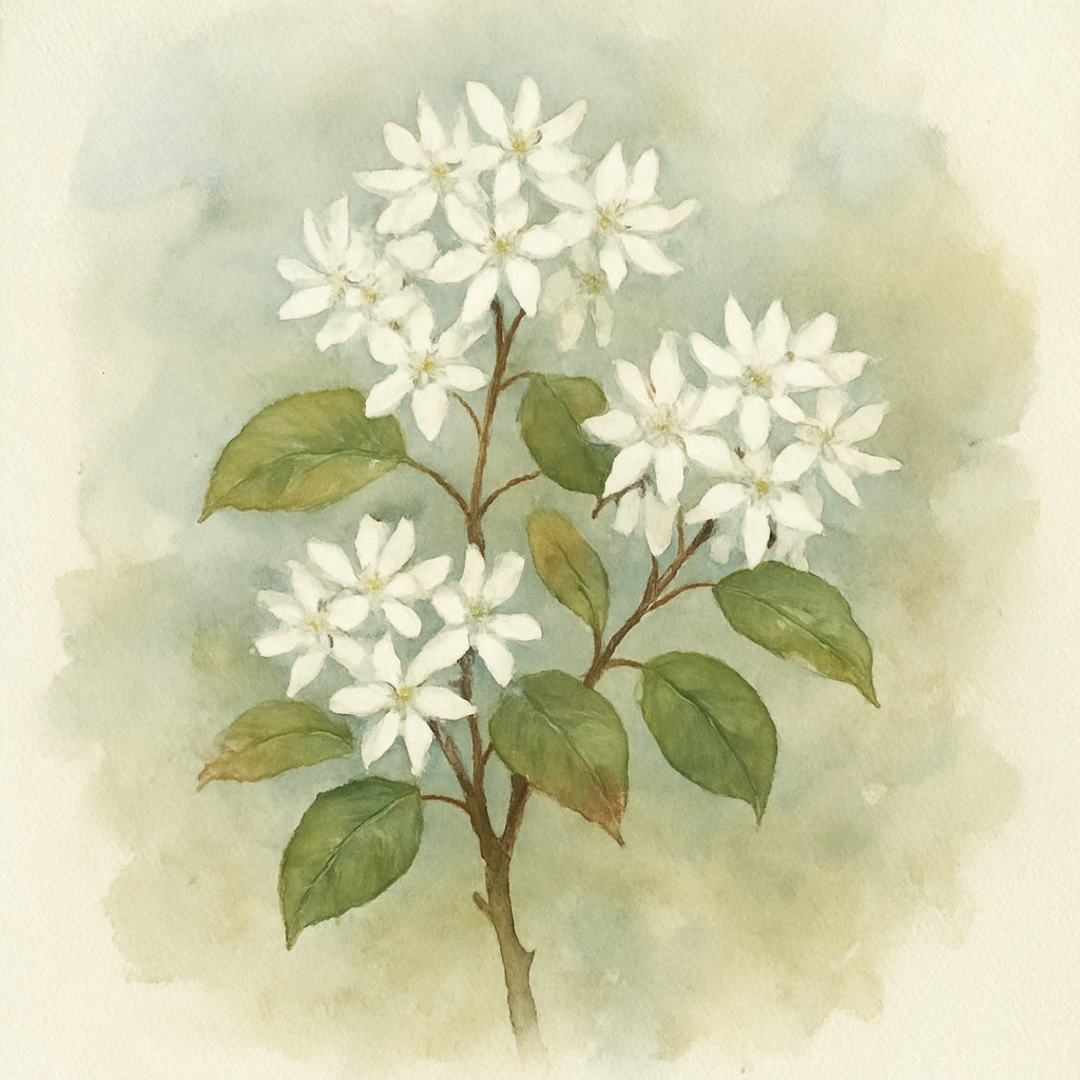
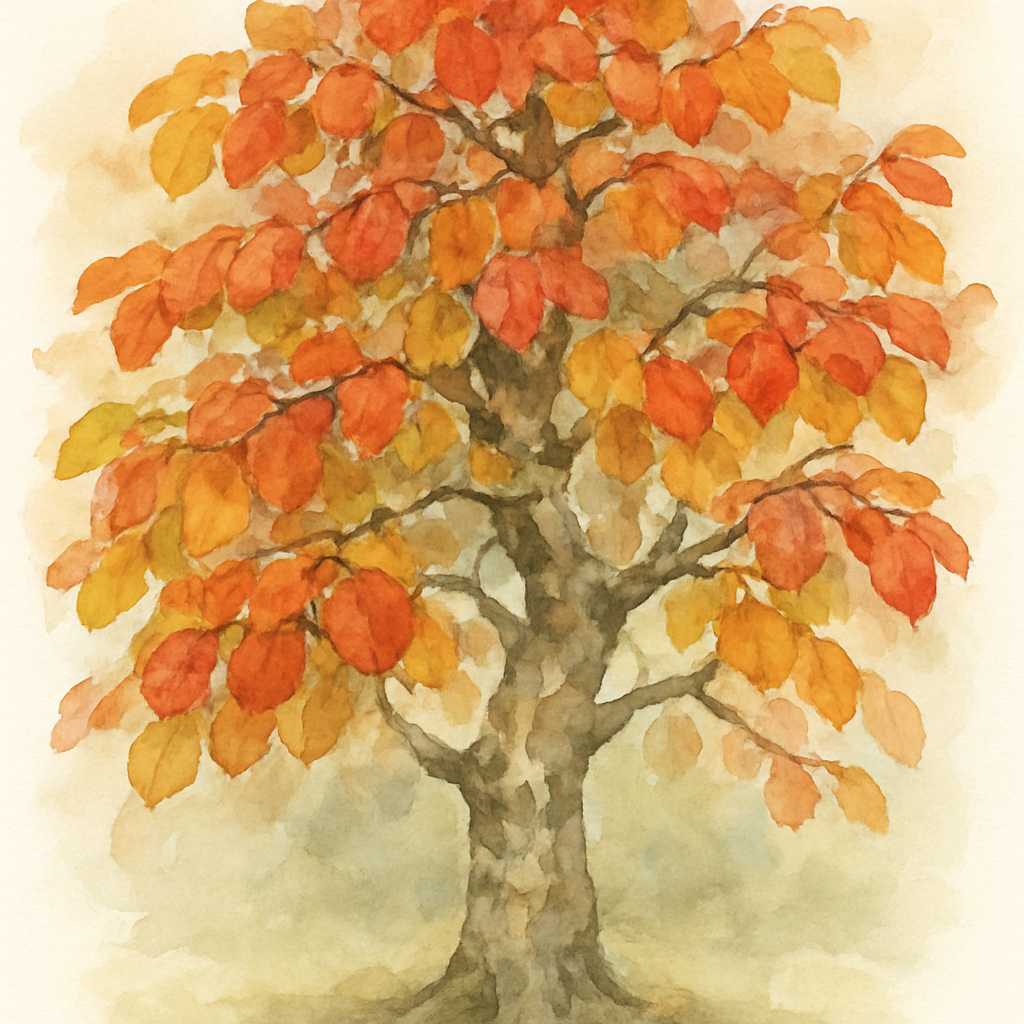
Medium — around five metres. The best all-round garden trees sit here. Amelanchier laevis 'Snowflakes' does more in a year than almost anything else its size: white blossom in spring, edible berries, and reliable orange-red autumn colour. Amelanchier 'Rainbow Pillar' does the same in an upright form for a narrower space.
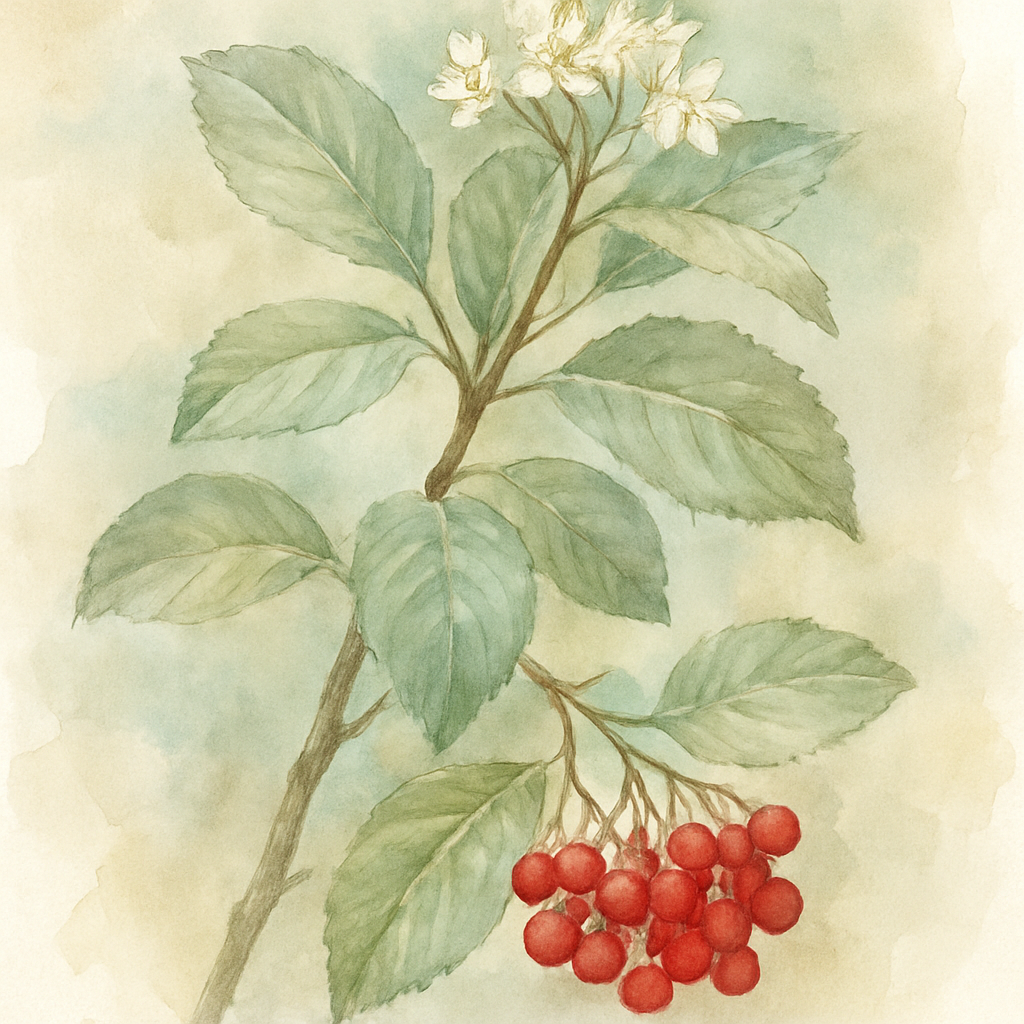
Large — eight metres and up. For a bigger garden only. Sorbus aucuparia, the rowan, is tough, native, and excellent for birds. Sorbus aria 'Lutescens', the whitebeam, has silver-backed leaves that flash in the wind and copes well with exposure and poor soil. Parrotia persica, Persian ironwood, has some of the best autumn colour of any tree grown in Britain and a fine spreading shape.
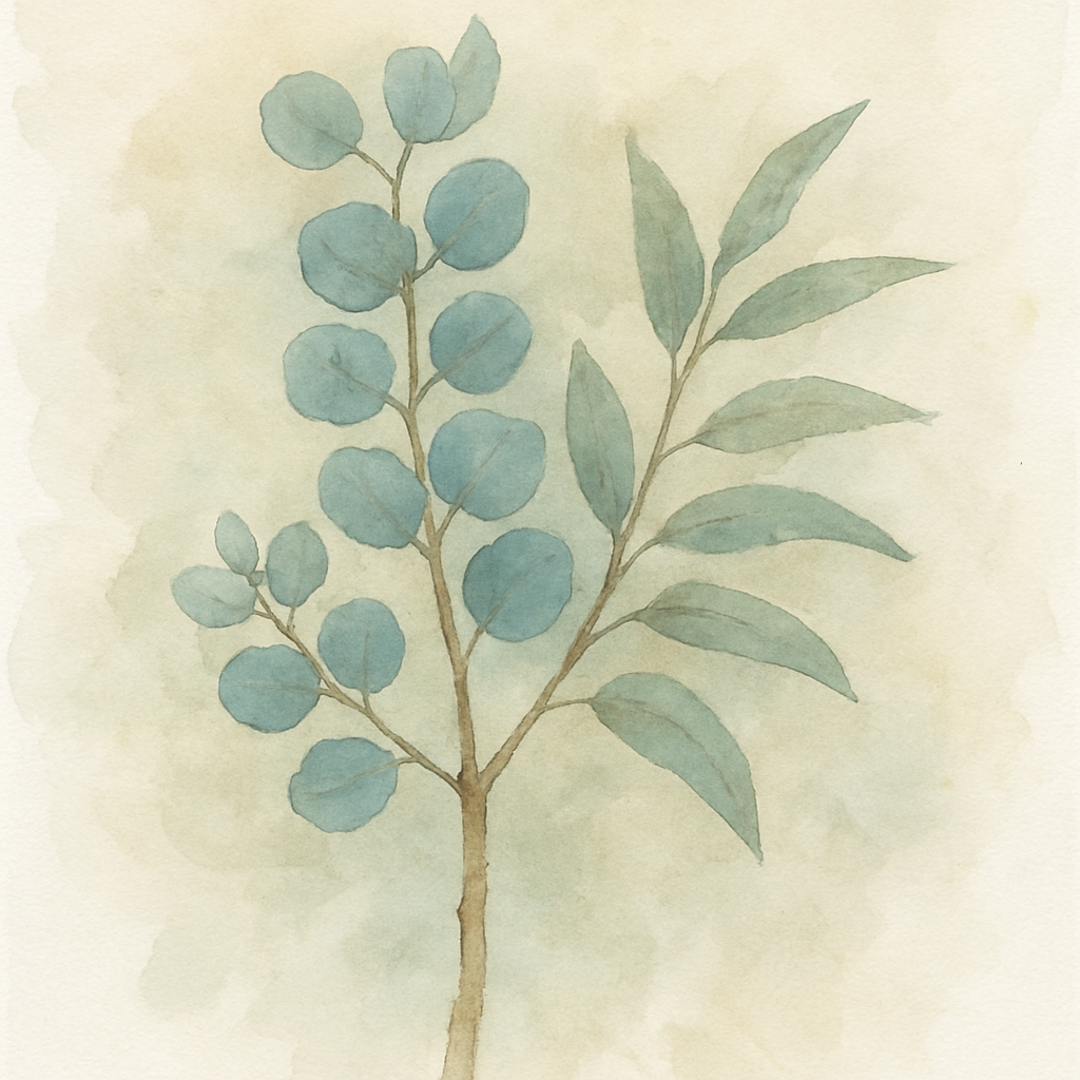
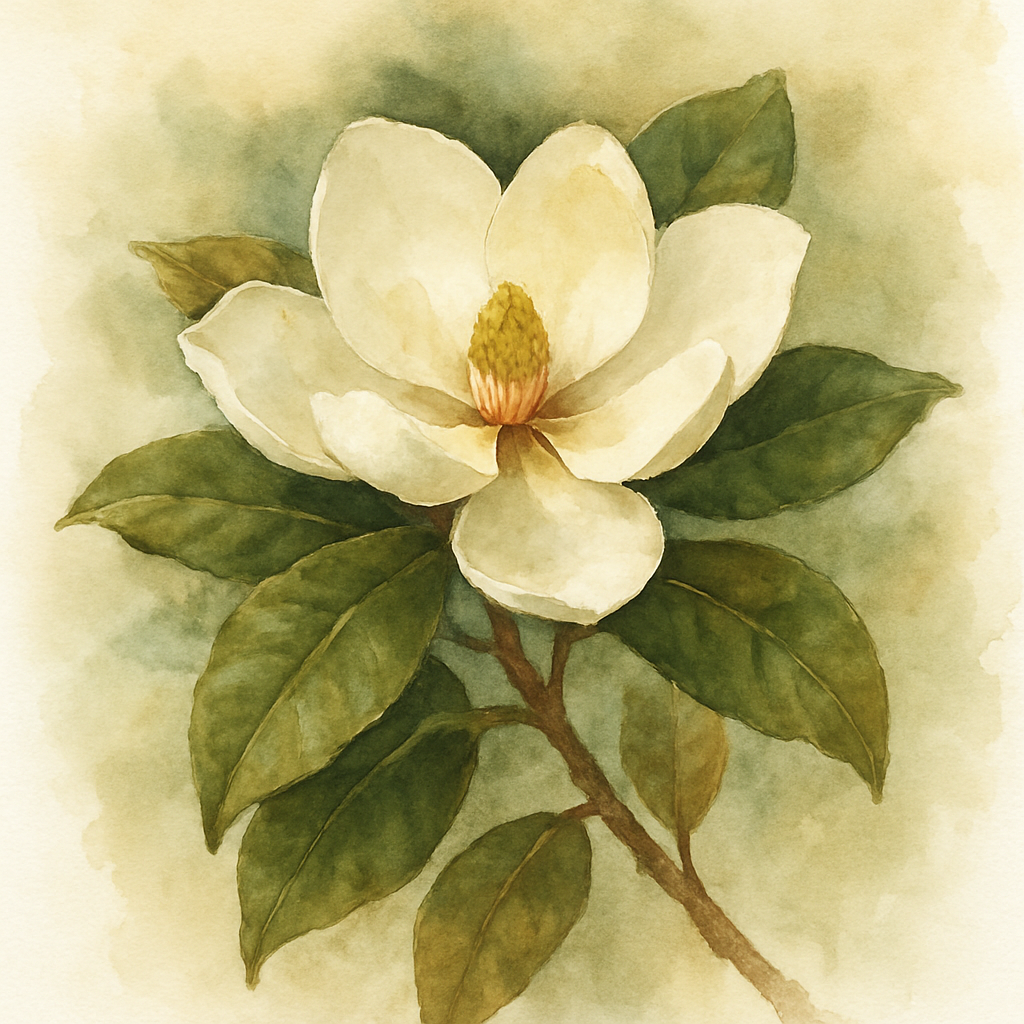
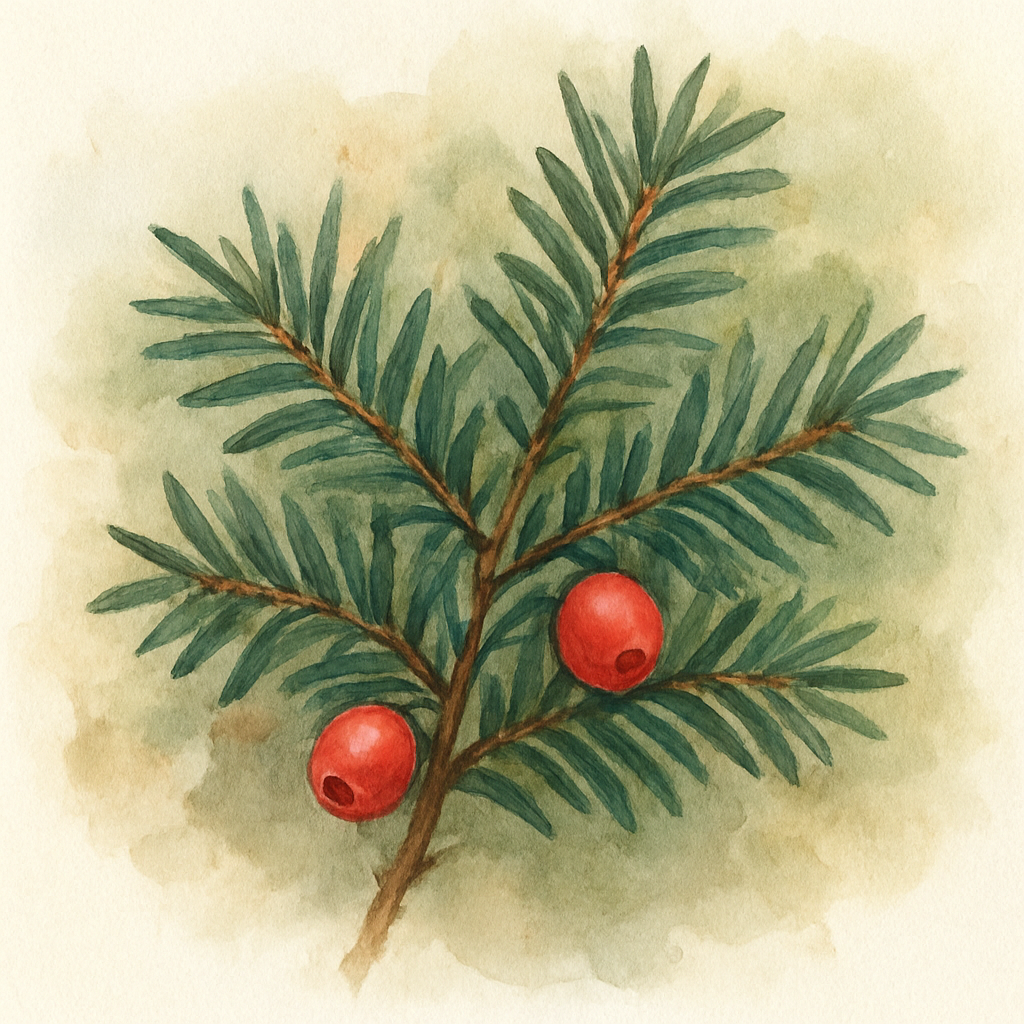
Evergreen options. Taxus baccata, yew, is the classic — slow, extremely long-lived, and tolerant of clipping to almost any shape or size. Magnolia grandiflora gives glossy evergreen foliage and large scented summer flowers, best against a warm wall. Eucalyptus gunnii will give you height fast and handles drought well, but it is genuinely vigorous, greedy for water when young, and needs hard pruning to stay in bounds — plant it knowing that, or not at all.
Two checks before you buy anything. Look up the ultimate spread as well as the height, and pace it out on the ground. And think about proximity to buildings and drains — on shrinkable clay soils, large thirsty trees planted close to a house can contribute to subsidence, and the rule of thumb of keeping a large tree at least its mature height away from a building is a reasonable starting point. If you are on clay and thinking about anything large near the house, get advice first.
When to plant
Autumn to early winter is the best planting window in Britain, and it is not a close call.
The soil is still warm from summer, so roots continue growing after the top of the tree has gone dormant. The tree then has autumn, winter and spring to establish before it faces its first summer, and the winter rain does most of the watering for you. A tree planted in November has a whole season of root growth banked before it is asked to support a canopy of leaves in July.
Bare-root trees — lifted from the field without soil — are available roughly from November to March and are the best option in almost every respect: they establish faster than containerised stock, there is more choice, and they are considerably cheaper for the same size. The catch is that they must go in during dormancy and cannot be held over.
Container-grown trees can technically be planted at any time. In practice, planting one in the middle of a summer drought is asking for trouble, and doing it in autumn instead costs you nothing but patience.
Spring is the second-best option, but a spring-planted tree faces its first summer with a root system only a few months old, so its watering requirement is considerably higher.
The part everyone skips
Here is the thing that kills newly planted trees, and it kills a great many of them.
A newly planted tree has no root system. Whatever it looked like in the pot, its roots occupy the volume of that pot and nothing beyond it. An established tree draws water from a wide area of soil and can ride out a dry summer without help. A new one is drawing from a rootball the size of a bucket, supporting a full canopy of leaves that is losing water all day. It cannot go and find more. There is no more.
That gap does not close in a few weeks. A newly planted tree needs sustained, deliberate watering through its first two growing seasons, and often into a third, and the first summer is critical. This is the single most common reason a tree dies in year one, and the death is always attributed to the tree being a poor specimen when in fact it simply ran out of water in July while somebody watered the pots.
What that looks like in practice:
- Water heavily and infrequently, not lightly and often. For a young tree in dry weather, think in terms of two or three full watering cans — 25 to 50 litres — delivered slowly, once or twice a week, rather than a splash every evening. The aim is to wet the whole rootball and the soil around it to depth.
- Deliver it to the rootball. For the first couple of years the roots are still largely in the original ball, which sits like a sponge in the surrounding soil and can dry out even when the ground around it is damp. Water directly over it. A pipe or a sunk pot set at planting time makes this much easier and is worth the two minutes it takes.
- Keep grass off it. Maintain a clear, mulched circle at least a metre across around the trunk for the first few years. Turf competes for water far more aggressively than most people expect, and a tree in mown grass establishes markedly more slowly than the same tree in a clean circle.
- Mulch it, with a gap at the trunk. Five to seven centimetres of bark or woodchip over damp soil, kept clear of the bark itself. The previous article in this series covers why the gap matters.
- Stake low and remove it in time. A short stake at about a third of the stem's height allows the top to flex, which is what makes the tree lay down strong supporting wood. Take stakes and ties off after two or three years; forgotten ties girdle the trunk and kill trees years later.
- Keep watering into autumn if it stays dry, and start again early the following spring rather than waiting for the tree to show stress. By the time a tree wilts visibly, it has been in difficulty for a while.
Set against that, a water butt is not a nice-to-have. Fifty litres a week through a dry summer is a great deal of water to carry from a tap, and it is exactly the volume a couple of linked butts hold. This is where the first article in this series meets the last one.
Worth starting anyway
The objection to planting a tree is always that it takes too long. It does take a while — an Amelanchier planted this autumn will be doing useful work in five or six years and looking established in ten.
But the alternative is that in ten years you have the same garden, in a climate that is measurably drier, with nothing casting shade over it. Every summer like this one makes the case stronger, and the best time to have started was a decade ago.
Plant it in November. Water it properly for two summers. After that it looks after itself, and it will outlast everything else you do this year.